

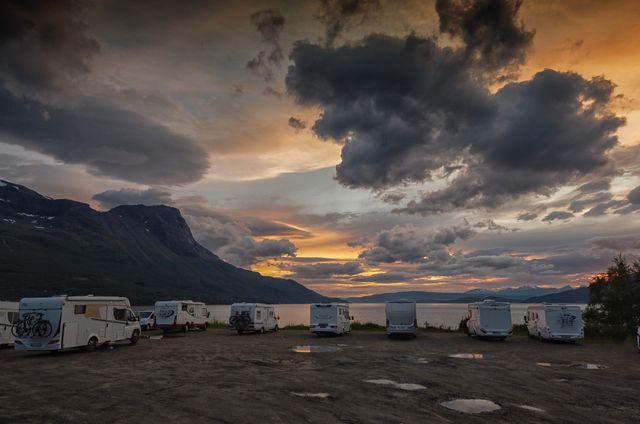
For travelers moving through the Calgary corridor, Diamond Valley sits in a very specific position, not quite city, not quite wilderness, but the final threshold before the Canadian Rockies take over completely. It’s where the landscape changes pace. Roads start climbing. Weather becomes more unpredictable. And recreational travel shifts from “driving” into something closer to “system management.”
This is also where a quieter shift in RV travel behavior is happening. Instead of dragging fully loaded rigs through every phase of the journey, more mountain travelers are decoupling their storage and staging process, using Diamond Valley as a controlled launch point rather than a temporary stop. Not because the old method doesn’t work, but because it creates unnecessary friction before the real trip even begins.
1. Conquering the Mountain Passage Bottleneck (Route 22 and Kananaskis Access)
The transition from foothills of Canadian rockies into alpine terrain is not gradual from a mechanical perspective, it’s abrupt. Highway 22 and surrounding feeder routes introduce steep elevation changes, sharper bends, and sudden wind exposure that directly impact towing stability.
For large RVs and trailers, this translates into:
- Higher transmission load
- Increased brake temperature cycles
- Reduced fuel efficiency under sustained incline
- Greater driver fatigue from constant correction
These operating pressures are precisely where strategically located RV Storage Black Diamond facilities become commercially valuable. Rather than repeatedly hauling large trailers through high-stress mountain corridors, travelers and seasonal operators can utilize decentralized storage hubs positioned closer to recreational destinations, reducing vehicle wear, fuel consumption, and transit risk while improving overall route efficiency.
Even when nothing “goes wrong,” the system is working harder than it needs to. That matters because it means your vehicle is already partially strained before you reach the places you actually came to enjoy.
2. Eliminating the Destination Parking Constraint
Backcountry access points are not designed for large recreational rigs. Trailheads, lake access zones, and scenic pullouts prioritize passenger vehicles, not multi-axle trailers or extended motorhomes. This creates a simple but common problem: arrival doesn’t guarantee access.
Even when you reach a destination successfully, you may still face:
- Limited turning radius clearance
- Tight or irregular parking geometry
- Full lots during peak season
- Restricted maneuvering space near natural boundaries
The result is often the same, either careful repositioning under pressure or skipping the stop entirely. A staged approach with a reliable RV storage facility in Diamond Valley removes that uncertainty by separating travel logistics from destination mobility.
3. The Bylaw Reality: When Informal Storage Stops Being Viable
As regional traffic increases, municipalities are tightening enforcement around trailer and RV parking in small communities along the corridor. In places like Diamond Valley, common restrictions include:
- Limits on how long RVs can remain parked on public roads
- Requirements for trailers to remain attached to towing vehicles
- Seasonal parking restrictions during winter months
What used to be informal “just leave it there for a bit” behavior is increasingly regulated. This shifts RV ownership from a casual parking model to a managed logistics decision. Without structured RV storage, travelers are left cycling between short-term parking uncertainty and last-minute departure stress.
4. Preventing System Shock at the Start of the Trip
One of the most overlooked issues in RV travel is not mechanical failure during transit, but system instability at the moment of departure. Vehicles sitting through winter storage or long idle periods often experience:
- Settled fluid systems
- Battery degradation under cold cycles
- Minor propane or water line inconsistencies
- Seal stress from temperature variation
When these issues are discovered deep in the backcountry, resolution becomes expensive, slow, or impossible.
A controlled staging environment provides expertise to check these systems before exposure to remote conditions; when fixes are still simple, not critical. On-site “Get Road-Ready” services allow travelers to complete full system checks; including water systems, propane safety, battery performance, and tire pressure calibration without leaving the facility. That shifts preparation from assumption to verification.
In essence, a well-equipped and strategically positioned RV storage facility functions as a structured transition point between urban departure and mountain access. These facilities must provide adequate space for long vehicles, well-designed outdoor RV positions, and secure indoor units. Such a facility creates a stable environment for staging large recreational assets, enabling travelers to explore their adventure and last-mile destinations with ease.
Find comprehensive details on our blog.